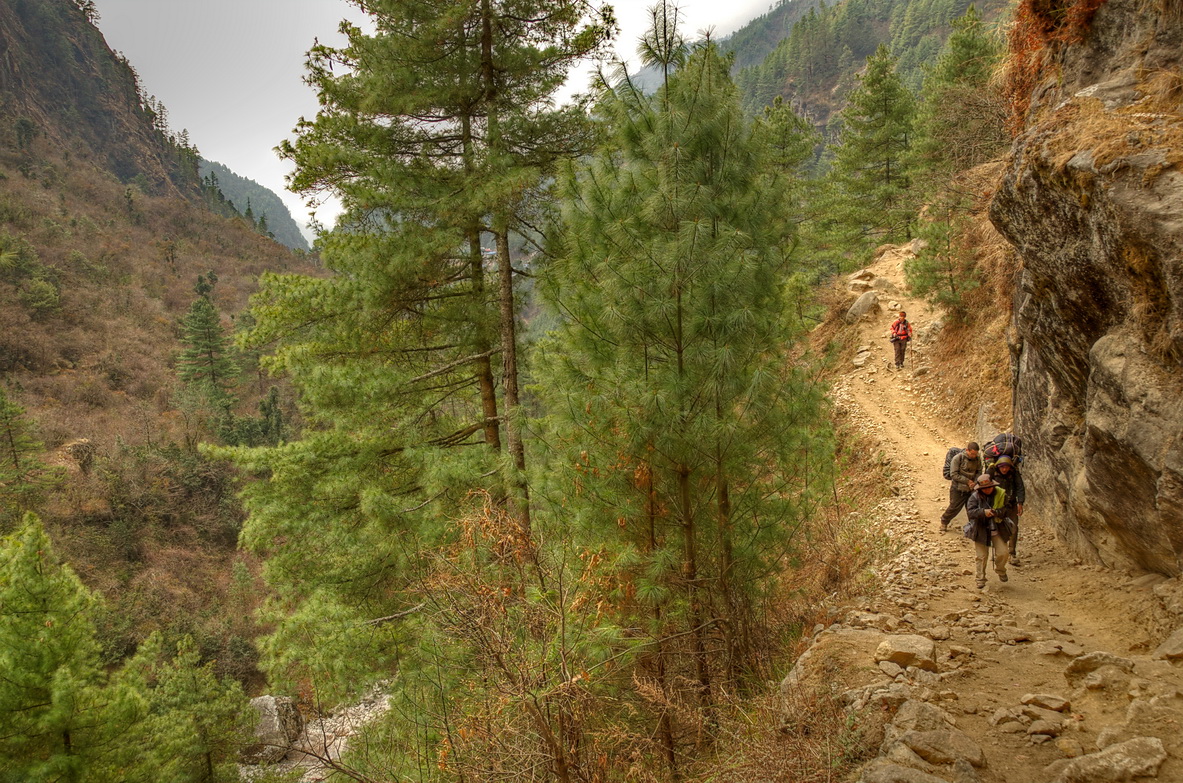
18 Days- Classic Everest Base Camp Trek (without flight)
About This Experience
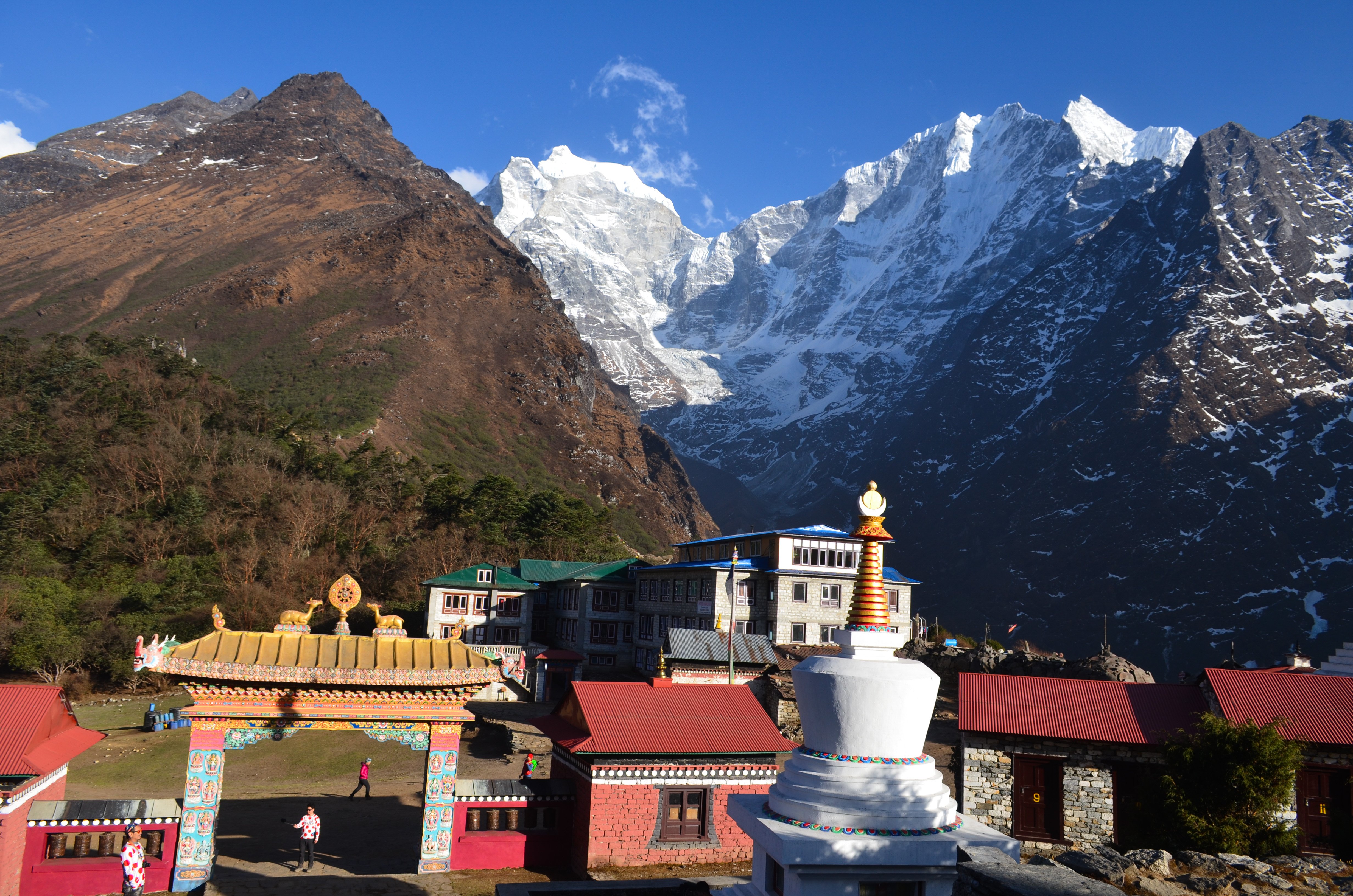
This splendid classic Everest Base Camp Trek, which follows the footsteps of the earliest climbers and trekkers, doesn’t have the internal flights. It is a perfect fit for those who want to avoid the famous Lukla flights. Since no flights are involved and a jeep drive is taken, we don’t have to worry about the unexpected bad weather which usually hampers the Lukla flights. As we start the trek from lower altitude than Lukla and have many days before we reach Everest Base Camp, this trek is best from the acclimatization standpoint. We start the trip from Kathmandu, the capital of Nepal, in a jeep. The jeep goes through various highways and the last one being the Everest Highway which connects to Chaurikharka village, just a little ahead of Lukla. Our first stop is at Salleri. From here, we take a drive through a dirt road until Nunthala; and from this point, we will start our trek to Everest. In this multi-day classic Everest base camp trek, we will pass through Namche Bazaar (the Sherpa capital), Tengboche Monastery (the largest in the region), Lobuche, Gorakshep and finally reach Everest Base Camp. This is the closest we get to Mt Everest without mountaineering equipment. There is an optional hike to Kala Patthar, the highest point of the trek. And then it is a downward trek to Nunthala and a long ride to Kathmandu.
What's Included
- Airport / Hotel / Airport pick up & drop off service by a private tourist vehicle Standard twin-sharing accommodation in a three-star hotel in Kathmandu including breakfast (2 nights) Guesthouse accommodation during the trek in mostly twin-share and occasionally dormitory-style rooms (15 nights) All standard meals during the trek (Breakfast, Lunch and Dinner) Licensed English-speaking trekking guide The required number of local staff and porters to carry your luggage during the trek (We assign one porter for every two guests.) Food, accommodation, salary, insurance, equipment and medicine for all staff Everest National Park permits and TIMS permit for trekking Down jacket and sleeping bag (to be returned after the trek) Jeep transfer from Kathmandu to Salleri to Nunthala and from Nunthala to Salleri to Kathmandu Free duffel/kit bag and sun hat (yours to keep) All our government taxes, vat, tourist service charges Official expenses
Not Included
- Lunch and dinner in Kathmandu Travel insurance which covers emergency high-altitude rescue and evacuation International airfare and airport departure tax Nepal entry visa; you can obtain the visa easily upon your arrival at Tribhuwan International Airport in Kathmandu (Tourist Visa with Multiple Entries for 15 days can be obtained by paying USD 25 or equivalent foreign currency. Similarly, Tourist Visa with Multiple Entries for 30 days and 90 days can be obtained by paying USD 40 and 100 respectively. Please bring 2 copies of passport size photos.) Alcoholic, hot and cold drinks Personal trekking equipment (Click on the Equipment tab.) Tips for trekking staff and driver (Tipping is expected.) Any others expenses that are not mentioned in the Price Includes section
Important Information
Here's what travellers should know before booking the 18-day Classic Everest Base Camp Trek (without flight), which typically follows the Jiri to Everest Base Camp
route:
Itinerary Overview
Route:
Starts from Jiri (or Bhandar) and joins the regular EBC trail at Phakding/Namche.
Duration: ~18 days total; longer due to trekking overland instead of flying to Lukla.
Trekking Days:
Around 14, 16 days, with acclimatization stops.
Why Choose the Classic Route?
Scenic Diversity:
Lush forests, terraced fields, and Sherpa villages before reaching alpine terrain.
Cultural Richness:
More interaction with local communities in the lower Solukhumbu region.
Less Crowded Start:
Quieter trails until Namche Bazaar.
No Flight to Lukla
Overland Drive:
8, 10 hours drive from Kathmandu to the trailhead (Jiri or Bhandar) by local bus or jeep.
Weather-Proof Option:
Avoids common Lukla flight delays or cancellations due to weather.
Physical Preparation & Difficulty
Strenuous Trek:
Requires good fitness; 5, 8 hours walking daily, with several steep ascents.
High Altitude:
Maximum elevation of 5,545 m at Kala Patthar.
Acclimatization: A
well-planned itinerary helps reduce the risk of acute mountain sickness (AMS).
Accommodation & Food
Teahouse Lodging:
Basic but comfortable; limited options in remote villages.
Food:
Simple local and international meals (dal bhat, noodles, soup, etc.); prices rise with altitude.
Permits Required
TIMS Card (Trekkers’ Information Management System)
Sagarmatha National Park Permit
Khumbu Pasang Lhamu Rural Municipality Entry Permit
Cost Factors
Includes: guide, permits, meals, lodging, drive to trailhead, porter (optional).
Excludes: personal insurance, tips, Wi-Fi, hot showers, and battery charging.
What to Pack
Layered clothing, a sleeping bag (good to -10°C), trekking boots, a headlamp, water purification, and first-aid essentials.
Best Time to Trek
Spring (Mar., May)
and autumn (Sept., Nov.)
offer clear skies, stable weather, and ideal conditions.
Avoid
monsoon (Jun, Aug) and winter (Dec, Feb) unless prepared for challenges.
Book With a Trusted Local Company
Ensure they provide experienced guides, a detailed itinerary, emergency support, and transparent costs.
Know Before You Go
The following gives you a general idea of the trekking equipment and clothing needed for this trek. This is a porter-supported trek. Two clients share one porter. We will supply you with a trek duffel bag where you keep your heavy items, and this bag is carried by the porter. You will need to bring your own daypack to be carried by you. In the daypack, you can put money, important documents, a water bottle/bladder, a camera, toiletries, sunscreen, a notebook, etc. You can leave your non-trekking stuff at the locker facility in the Kathmandu hotel. General 4-season sleeping bag (We can provide one if you need it but has to be returned after the trek.) Duffel bag (We will provide one complimentary duffel bag, which is yours to keep.) Daypack Down jacket (Must have for mornings, nights and evenings, and for altitudes above 4,000 m; We can provide it if you need one, but has to be returned after the trek.) Upper Body Sun hat Wool or synthetic hat that cover the ears Sunglasses with UV protection Headlamp Neck warmer Hand Liner gloves Heavier shell gloves Body T-shirts Lightweight expedition thermal tops Fleece jacket or pullover Water/windproof shell jacket (Preferably breathable fabric) Synthetic sports bras (For women) Lightweight expedition thermal bottoms Nylon hiking shorts Soft and shell trekking pants Water/windproof trousers Casual pants Feet Liner socks Heavyweight socks Waterproof hiking/trekking boots Light shoes/sneakers/sandals Gaiters (For monsoon and winter) First Aid Kits (Please note our guide will carry the first-aid kit bag during the trek.). However we still recommend you bring your personalized first-aid kit as well.) Extra Strength Excedrin for altitude related headaches Ibuprofen for general aches and pains Immodium or Pepto Bismol capsules for upset stomach or diarrhea Diamox (commonly prescribed as Acetazolamide) 125 or 250mg tablets for altitude sickness Anti-infection ointments Band-aids Lip balm (At least SPF 20) Sunscreen (SPF 40) Misc Passport and extra passport photos (3 copies) Airline ticket (Please make a copy and leave one at our office in Kathmandu just in case if you need to change the date of your flight.) Durable wallet/pouch for travel documents, money & passport Water bottle/bladder Water purification Iodine tablets Toiletry kit (Be sure to include toilet paper stored in a plastic bag, hand wipes, liquid hand sanitizer, towel, soap, etc.) Optional Adjustable trekking poles Favorite snack foods (No more than 2 pounds) Paperback books, cards, mp3 player Binoculars Cameras (Memory cards, chargers and also batteries) Pee bottle for men and pee funnel for woman This list is only a guide. While you are required to bring everything on this list, there are numerous options, brands, and versions of each piece of equipment. Use your experience and the listed features to find the best gear for you. Some of the above equipment can be easily found in stores in Kathmandu for cheaper prices.
Cancellation Policy
2 days to 7 days before
Within 2 days of the experience
Where You'll Be
Kathmandu, Nepal
Hosted by
Loading booking options...
Reviews
Loading reviews...