Overview
Step into the heart of the Khumbu on a 13-day Everest Lobuche Trek designed for trekkers who want Himalayan grandeur without excess cost or time away. Beginning and ending in Kathmandu, Nepal, this Stay & Play balances value with comfort, using a quieter, scenic route through Phortse and Dingboche for generous acclimatisation and soul-stirring views.
This experience purposefully excludes airport reception and city sightseeing in Kathmandu and Patan, giving you the freedom to choose your preferred hotels, cafés, and wellness Stays before and after the trek. On the trail, cosy teahouses, crisp mountain air, and Sherpa hospitality guide you towards Lobuche’s high, austere beauty and the fluted summits of Everest, Lhotse, and Ama Dablam.
Highlights
- Serene alternative route via Namche, Phortse, and Dingboche
- Ample acclimatisation built into the 13-day flow
- Panoramas of Everest, Lhotse, Ama Dablam, and the Khumbu Glacier
- Cultural immersion in Sherpa villages and monasteries
- Flexible city Stays in Kathmandu to match your style and budget
What to Expect
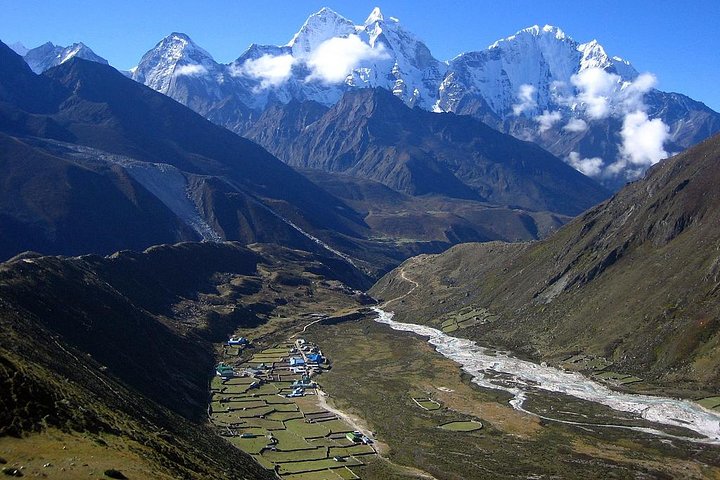
The Everest Lobuche Trek traces an elegant arc through the Khumbu. After a scenic hop from Kathmandu to Lukla, you join the Dudh Kosi, climb to Namche Bazaar, and then branch onto a less-travelled hillside towards Phortse. The trail threads stone-walled terraces, rhododendron slopes, and chortens brushed by prayer flags, before easing to Dingboche and onwards to Lobuche.
Expect 5–7 hours of hiking most days, with dedicated acclimatisation in Namche and Dingboche. The pace is unhurried, allowing your body to adapt while you savour views over the Khumbu amphitheatre.
Accommodation and dining
Kathmandu is entirely your canvas—choose charming boutique Stays or contemporary hotels to suit your budget and taste. On trek, traditional teahouses provide hearty meals and warm communal spaces where you can recharge by the stove and trade stories with fellow travellers.
Menus are comforting and simple—think dal bhat, soups, momos, noodles, and hot tea. We recommend carrying your favourite snacks for the higher days when appetite can ebb with altitude.
Altitude and acclimatisation
Lobuche sits at around 4,910 metres, so altitude awareness is central. Built-in acclimatisation walks from Namche and Dingboche help your body adapt; your guide will set a measured pace and encourage steady hydration and good sleep hygiene. Mild symptoms can be normal, but severe or worsening signs require immediate descent—safety and clarity come first.
Consider discussing acetazolamide (Diamox) with your GP before travel; it’s a decision best made with medical advice. Travel insurance that covers high-altitude trekking is essential.
Fitness and preparation
You don’t need to be an elite athlete, but a consistent base of hill-walking or cardio for 6–8 weeks prior will reward you with easier days and fresher mornings. Aim for back-to-back hiking days, some stair repeats, and strength work for legs and core. Good trekking poles can save knees on the long descents.
Kit you’ll be glad you packed
Layering is everything. Quality technical layers from Arc’teryx help regulate temperature as the trail rises from forest to moraine. Pair them with a reliable trekking pack from Osprey for balanced carry and quick access to water, gloves, and a warm hat.
Other essentials include a 4-season sleeping bag, compact down jacket, waterproof shell, sunglasses with UV protection, sun cream, blister care, and a refillable bottle or soft flask. In Kathmandu, you can rent or buy extras—but test footwear at home before you fly.
Route variations and complementary treks
If you prefer a shorter, punchier route to high viewpoints near the base camp approach, consider our 9-day option, the Everest Gorak Shep Trek. For a tranquil lower-Everest arc with sweeping sunrise ridges, the Everest Pikey Peak Trek is a deserving hidden gem. Or, if your heart leans west, the high passes and villages of the Annapurna Circuit Trail offer a classic Himalayan counterpoint.
Best Time to Visit
Spring (March to May) brings lengthening days, warmer afternoons, and rhododendrons in bloom below the snowline. Views can be slightly hazier by afternoon, but mornings are often radiant, and the energy on the trail is buoyant.
Autumn (late September to November) delivers the clearest skies of the year after the summer rains. This is prime trekking season in Nepal, with crisp mornings, long vistas, and reliably dry paths.
Winter (December to February) is cold but quiet, with glassy skies and empty teahouses for those comfortable in sub-zero conditions. Monsoon (June to early September) is lush and atmospheric, but clouds can hide the big peaks and flights are more weather-dependent.
Why Choose This Experience
This 13-day Stay & Play is purpose-built for travellers who value time, comfort, and authenticity. By skipping airport reception and city tours in Kathmandu, you control your budget and curate your own pre- and post-trek Stays—whether that’s a heritage courtyard hotel, a spa session, or a simple, central base near Thamel.
The route choice via Phortse and Dingboche keeps things calm and scenic. You’ll cross gentle balconies above the Dudh Kosi and look across to the knife-edge ridges of Ama Dablam—a painterly procession that few trekkers see on the standard EBC highway.
With acclimatisation thoughtfully baked in, you’re poised to move safely and steadily. The rhythm is balanced: enough challenge to feel achievement daily, enough ease to notice the scent of juniper smoke and the hush of evening bells at the monastery.
Cultural connection is at the heart of this journey. Sherpa villages welcome you with warmth and pragmatism; you’ll learn how altitude shapes life here—harvests, housebuilding, and khata blessings spun into everyday routine.
For more inspiration on crafting multi-day Himalayan adventures, explore our guide to the Annapurna Circuit: 15-Day Stay & Play from Kathmandu. It pairs seamlessly with the mindset of this trek: authentic, flexible, and purpose-led.
Practical notes
- Permits are arranged in-country; carry a few passport photos and keep your original passport accessible.
- Weather can ground flights to/from Lukla; build a buffer day in Kathmandu, and keep plans agile.
- Hydration and nutrition matter more at altitude—sip steadily and aim for balanced meals.
- Pack light but decisive; your future self at 4,500 metres will thank you.
The Epanoui Difference
Epanoui’s Stay & Plays are curated with calm confidence—spaces and routes that breathe, guides who prize safety, and itineraries that respect place and people. On the Everest Lobuche Trek, that means quieter paths, measured acclimatisation, and the freedom to tailor your Kathmandu Stays without add-ons you don’t need.
Whether this is your first Himalayan journey or a return to familiar ridgelines, this 13-day trek from Kathmandu is a serene, purposeful way to stand among the giants of Nepal—present, unhurried, and fully alive.