Step beyond the ordinary Everest trail with a Stay & Play that pairs iconic summits with authentic Sherpa homestays. This purposeful journey moves at a considered pace, blending world-class trekking-hiking with cultural immersion in Kathmandu and the Khumbu of Nepal.
You will walk beneath Ama Dablam’s elegant ridgelines, trace the moraine of the Ngozumpa Glacier, and share warm meals in family homes in Phortse, Khumjung, and Gokyo. It’s a rare, human-centred approach to the Everest Base Camp & Gokyo Lakes Homestay Trek.
Overview
This 15-day stay_and_play begins and ends in Kathmandu, Nepal, and traverses the Everest and Gokyo Valleys via the dramatic Cho La Pass (5,420 m). You’ll stand at Everest Base Camp (5,364 m), greet sunrise from Kala Patthar and Gokyo Ri, and sleep in carefully selected homestays where story, heritage, and hospitality are part of the trail.
Our small-group format keeps the journey intimate and ethical. Licensed mountain guides manage daily pacing, acclimatisation, and safety, while your hosts open a window into Sherpa life—spiritual traditions, local farming, butter tea, and timeless resilience.
What to Expect
Route & Highlights
- Kathmandu warm-up and flight to Lukla, then classic approach through Phakding and Namche Bazaar with time to acclimatise.
- Cultural detours to Khumjung and Tengboche Monastery, a serene hinge between forested valleys and high peaks.
- Push to Everest Base Camp via Lobuche and Gorak Shep, with an early ascent of Kala Patthar for sunrise over Everest, Lhotse, and Nuptse.
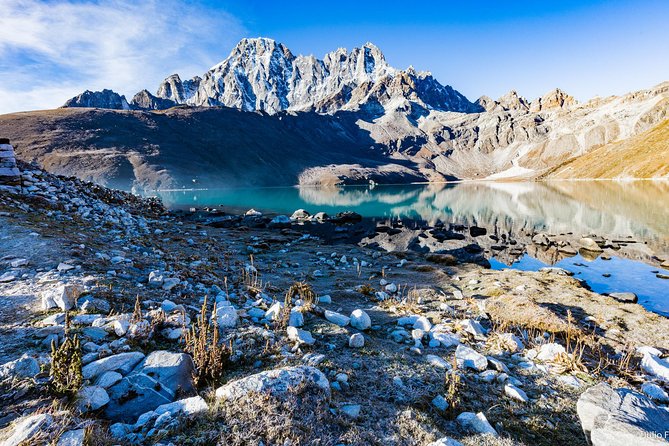
- Cross the crevassed approaches of Cho La Pass, linking to the sapphire sweep of the Gokyo Lakes.
- Summit Gokyo Ri at dawn for a 360-degree theatre of Everest, Makalu, and Cho Oyu; descend via Dole and return to Lukla.
For travellers short on time, consider the condensed Everest Gorak Shep Trek – 9 days to experience the region’s essence in a focused window.
Homestay Evenings & Cultural Immersion
Staying in Sherpa homes transforms a great trek into a meaningful exchange. Expect simple, comfortable rooms, home-cooked dal bhat, and fireside conversations about mountaineering legends, seasonal rituals, and village life.
Your hosts in Phortse, Khumjung, and Gokyo share lived wisdom—how to move in the mountains, what the Gokyo Lakes mean spiritually, and how communities steward fragile alpine environments. It’s cultural-immersion as it should be: respectful, curious, and mutually enriching.
If you’re drawn to meditative travel, extend your time in Nepal with our Spiritual Journey to Lumbini for eight serene days of pilgrimage and mindfulness.
Pace, Fitness & Altitude
This is a moderate-to-challenging multi-sport trek with daily walks of 5–7 hours and significant elevation. Two acclimatisation days are built in to support a steady ascent and safeguard wellbeing.
Your guides monitor hydration, nutrition, and pace, and will advise on breathing techniques and rest. Even experienced trekkers respect the altitude; patience is your strongest strategy at 5,000 m and above.
Gear & Trail Support
Comfort and warmth at altitude depend on disciplined layering and well-fitted packs. Consider a ventilated daypack from Osprey, responsive footwear from Salomon, and a reliable insulated mid-layer from Rab for crisp mornings.
Trekking poles, a 3–4 season sleeping bag, and UV protection are essential. Your team handles route finding and safety, leaving you free to be present with the landscape and your hosts.
Responsible Travel & Safety
This Stay & Play champions small-group, ethical travel—fair porter welfare, plastic reduction, and community-first partnerships. For destination insights, permits, and current guidance, refer to official Nepal Tourism resources.
For an additional planning perspective and inspiration, see Lonely Planet’s Nepal guide.
Best Time to Visit
Spring (March–May) brings rhododendron bloom, longer daylight, and stable trekking conditions. Views are typically clear on high passes and summits, with cool, comfortable temperatures at night.
Autumn (September–November) is the premier season: post-monsoon clarity, crisp air, and photogenic light. Trails are livelier but never rushed in our small groups.
Winter (December–February) offers solitude and diamond-cut skies but demands robust cold-weather systems and flexibility around snowfall on Cho La. The summer monsoon (June–August) is less suitable due to heavy rain and reduced visibility.
Why Choose This Experience
- Dual icons, one journey: Everest Base Camp and Gokyo Ri, linked by the adventurous Cho La Pass.
- True cultural-immersion through vetted homestays in Phortse, Khumjung, and Gokyo—more connection, fewer crowds.
- Calm, competent leadership: licensed guides, safety-led pacing, and a premium yet unpretentious approach.
- Meaningful Stays & Plays: restorative time in Kathmandu bookends the trek so you finish not just accomplished, but well.
If you’re comparing Himalayan routes, explore our editorial on the Annapurna Circuit: 15-Day Stay & Play from Kathmandu for another world-class, culturally rich itinerary.
Travellers seeking a purist, slower rhythm can also consider the Classic Everest Base Camp Trek – 18 Days (without flight), a beautiful alternative that honours the historic approach.
Final Notes
- Activity style: trekking-hiking with layered cultural immersion; a considered multi-sport experience in high-alpine terrain.
- Who it’s for: curious, active travellers who value meaningful exchanges as much as big summits.
- What you’ll remember: the hush before dawn on Gokyo Ri, the shimmer of the lakes, and the warmth of a shared kitchen in a Sherpa home.